
Drones Management
Drones Management
Drone Management involves the coordination, monitoring, and control of multiple drones for various applications such as surveillance, delivery, inspection, and emergency response. Here’s a structured breakdown of the concept:
What is Drone Management?
Drone management refers to the systems and processes used to oversee drone operations safely and efficiently, especially in environments where multiple UAVs (Unmanned Aerial Vehicles) are operating simultaneously.
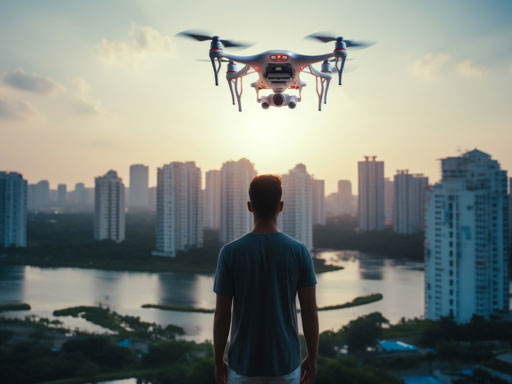
Core Components of a Drone Management System

Flight Control Systems
- Real-time tracking of drone location, altitude, speed, and path.
- Remote or autonomous navigation using GPS and AI algorithms.

Fleet Management
- Assigns tasks to different drones based on their capabilities, battery status, and availability.
- Prevents collisions and ensures optimized flight paths.
Communication & Networking
- Uses 4G/5G, RF, or satellite links for real-time telemetry and command.
- V2V (Vehicle-to-Vehicle) and V2I (Vehicle-to-Infrastructure) communication.

Airspace Integration
- Interfaces with Unmanned Traffic Management (UTM) systems.
- Ensures drones operate within legal and safe airspace constraints.

Data Management
- Collects, stores, and processes images, video, and sensor data.
- Uses cloud platforms or edge computing for real-time analysis.

AI & Automation
- Enables object detection, route optimization, and behavior prediction.
- Facilitates automated takeoff, landing, obstacle avoidance, and emergency rerouting.